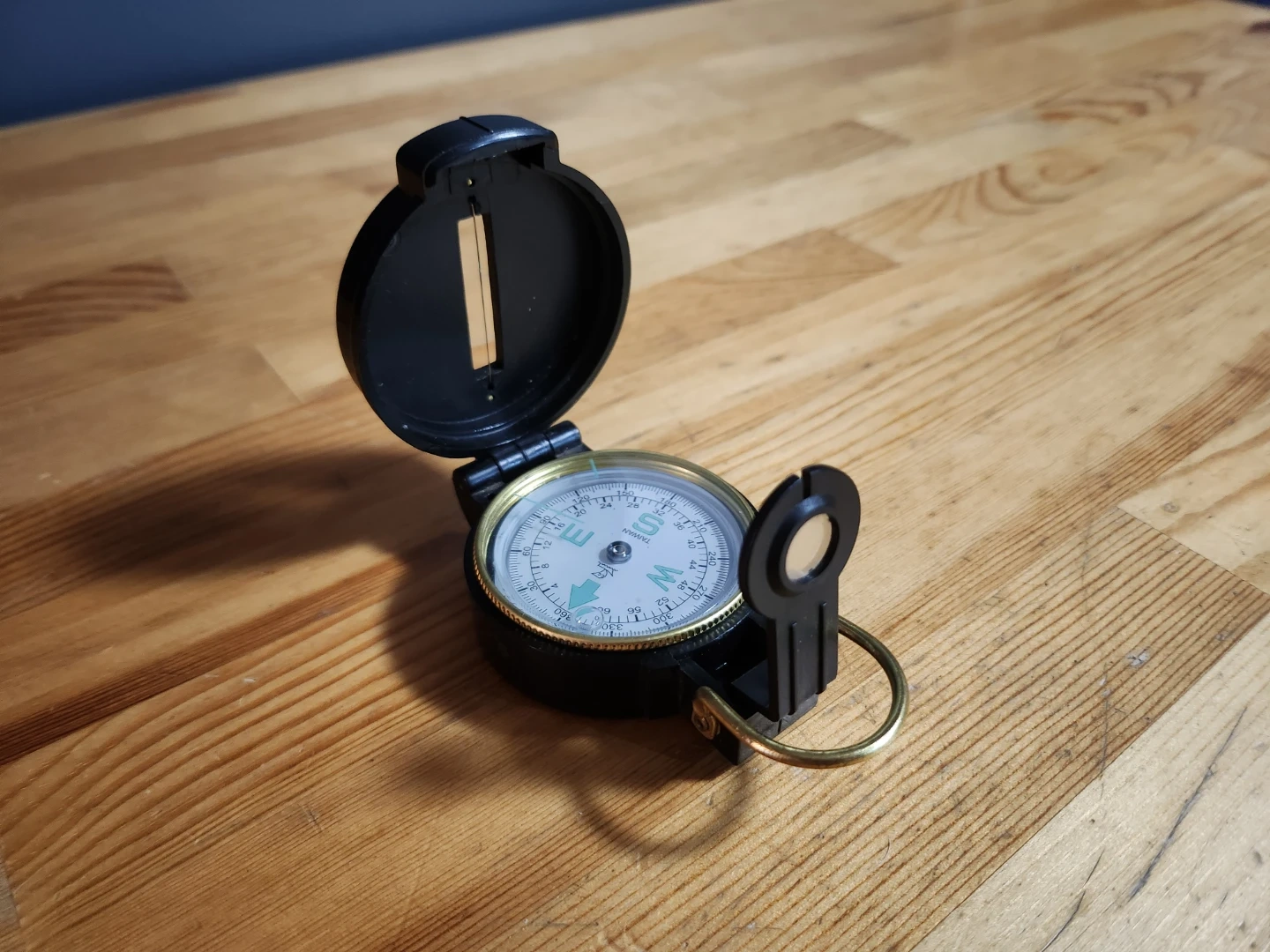
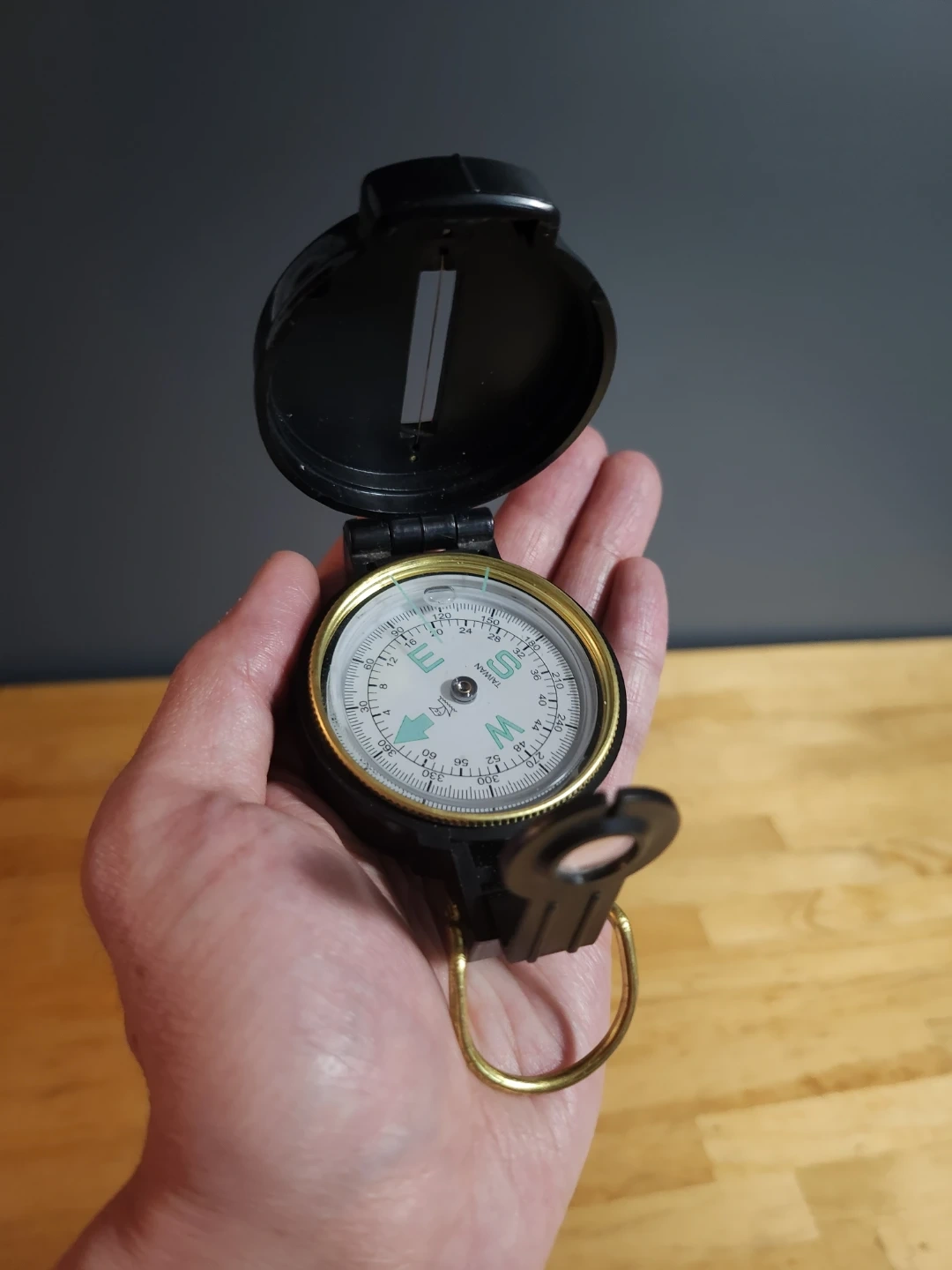
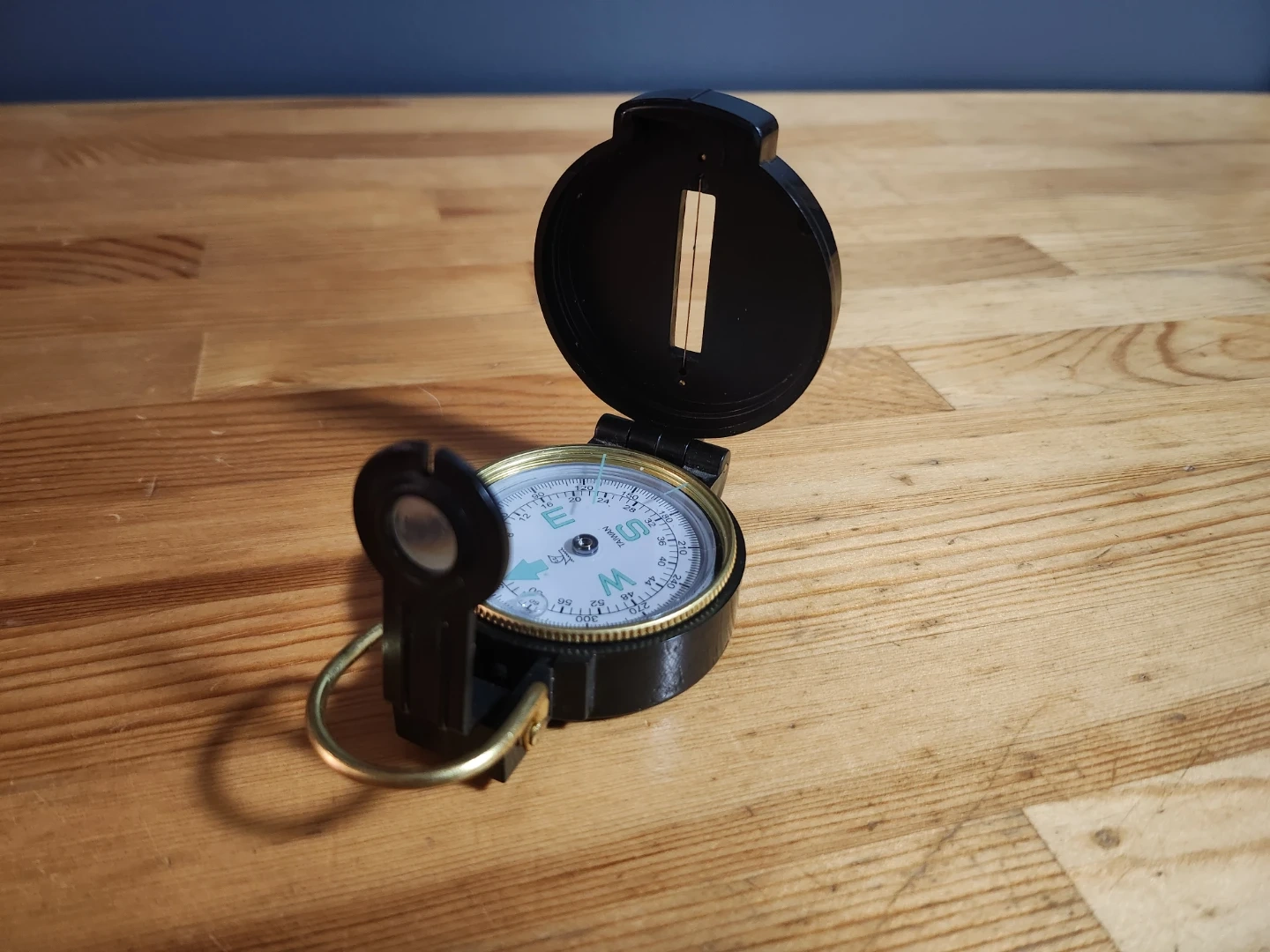
Classic Engineer Lensatic Compass
$20
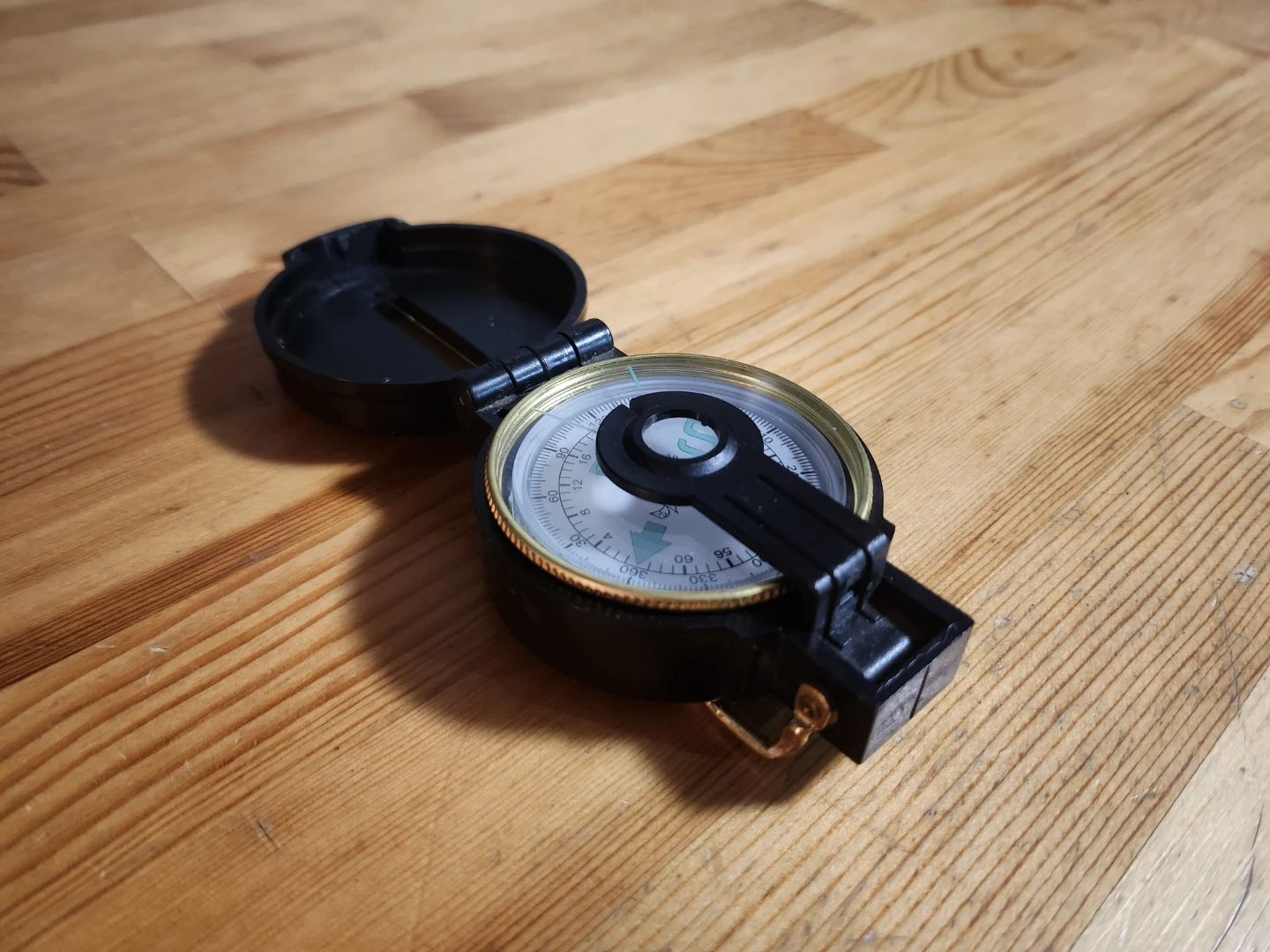
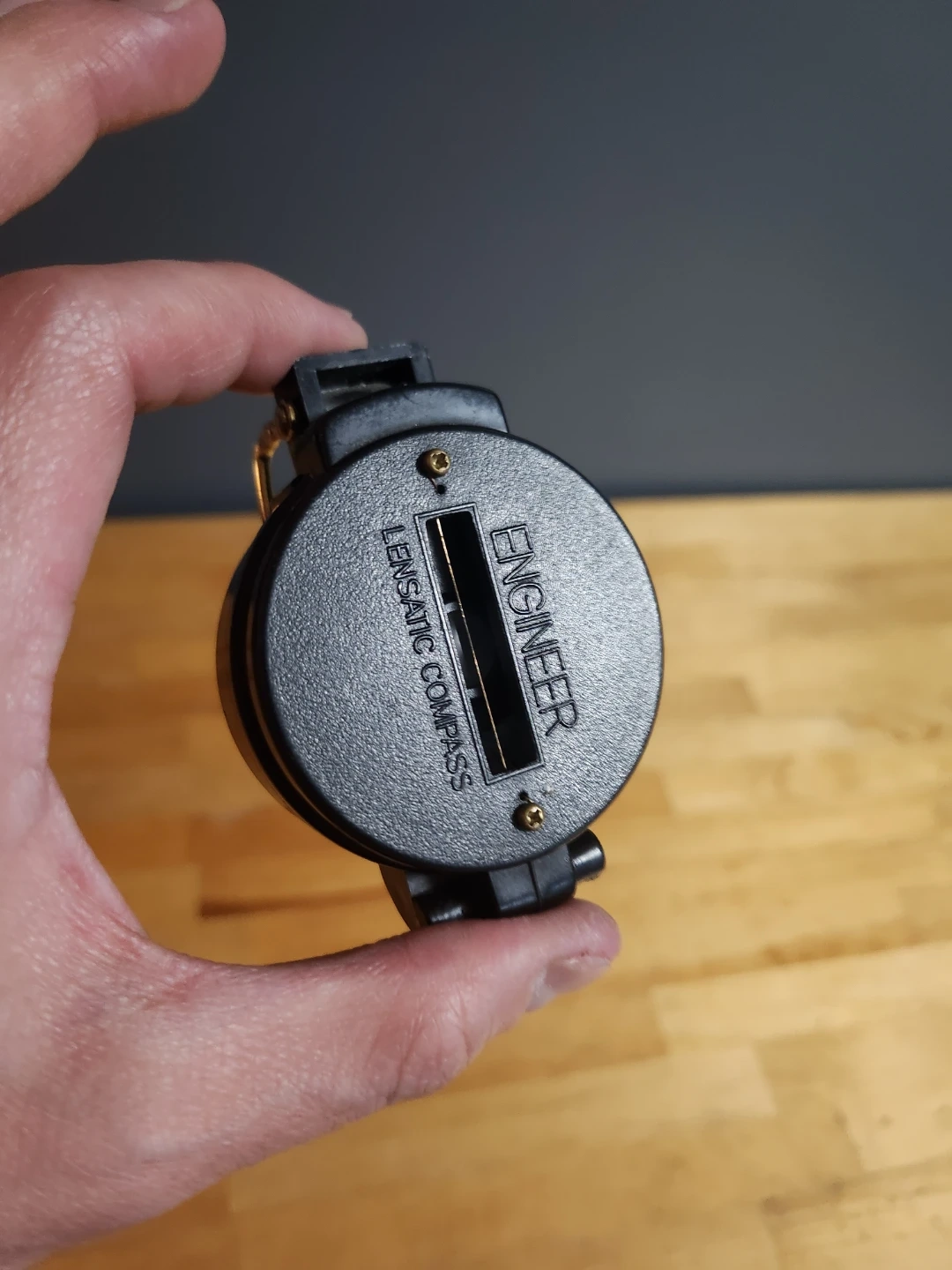
Classic Engineer Lensatic Compass. This style is modeled after the standard U.S. military M-1950 compass and is designed for high-accuracy sighting—essentially "shooting" a line from your eye to a distant landmark.
Core Components:
- The Cover: Contains the Sighting Wire (the vertical thin line). This acts as your "front sight."
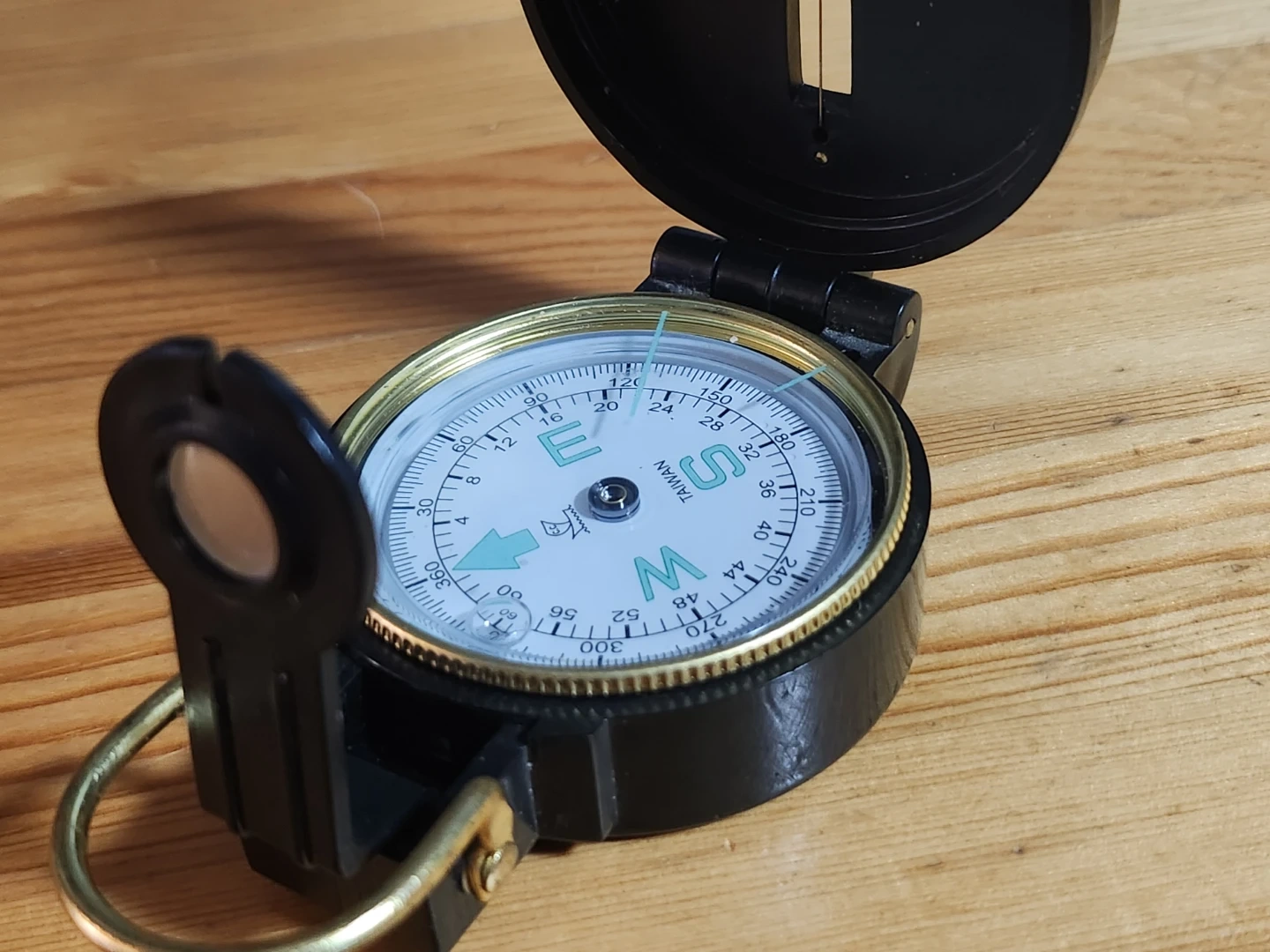
- The Base: Houses the Floating Dial, which is the white disc that moves. It has two scales:
- Inner Scale (Black/Red): Degrees (0^{\circ} to 360^{\circ}).
- Outer Scale: Mils (0 to 6400), used primarily for artillery and high-precision mapping.
- The Rear Sight (Lens): The small flip-up piece with a magnification lens. This allows you to see the tiny numbers on the dial while simultaneously looking through the sighting wire.
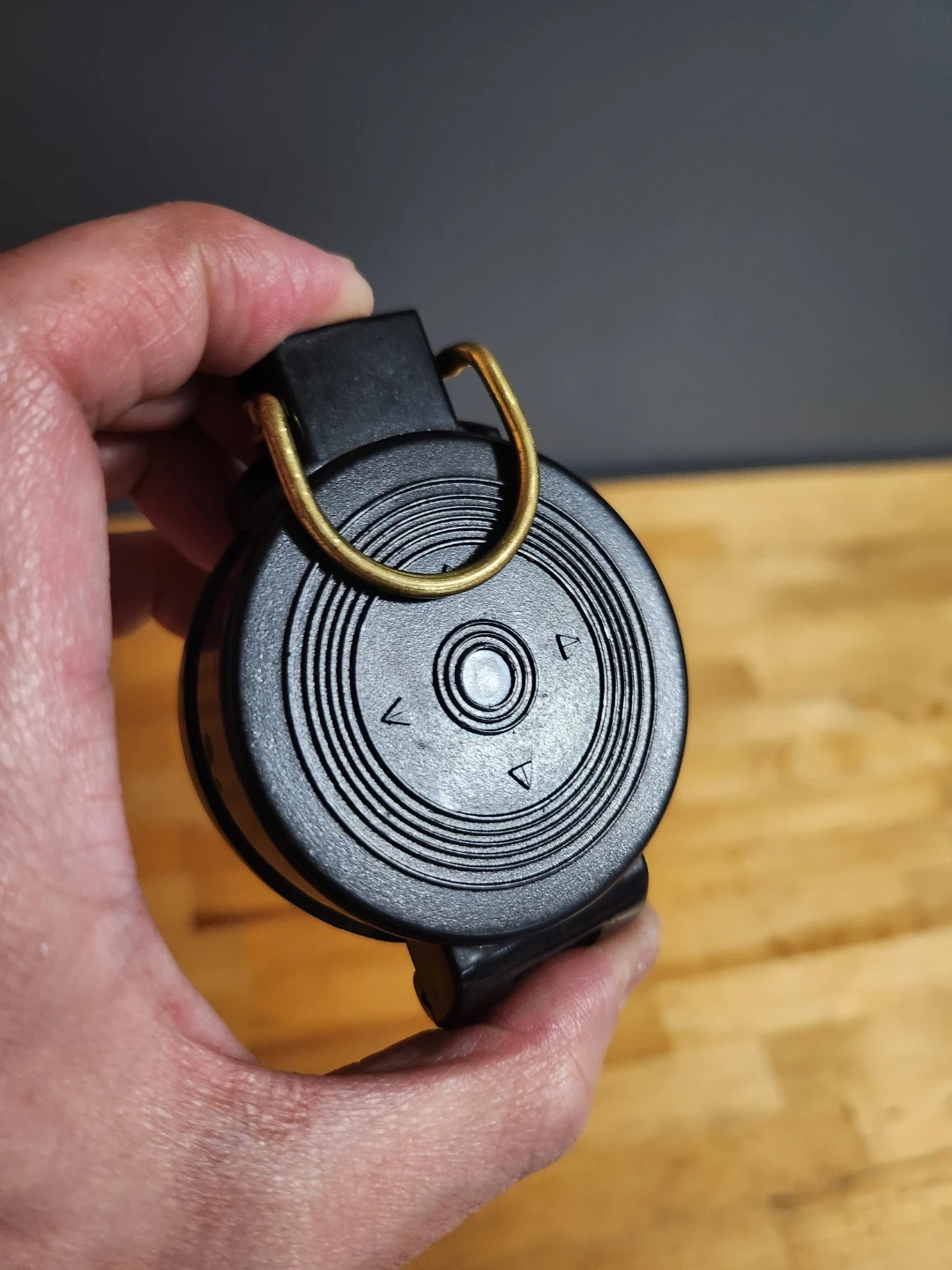
- Thumb Loop: Used to steady the compass during a "Compass-to-Cheek" sighting.
Bezel Ring: The rotating brass-toothed ring. It usually has a Luminous Line used for night navigation.
How to Use: (The Compass-to-Cheek Method)
- This is the most accurate way to find your "bearing" (the direction to a specific object).
Open the Compass: Flip the cover up to a 90^{\circ} angle. Flip the rear sight (the lens) up about 45^{\circ}.
- Hold it Right: Put your thumb through the thumb loop and rest the base of the compass on your closed fist. Use your other hand to steady it.
- Sight Your Target: Hold the compass up to your eye. Look through the small Sighting Slot at the top of the lens piece. Align the Sighting Wire in the cover with a distant object (like a mountain peak or a specific tree).
- Read the Bearing: Without moving the compass, look down through the magnifying lens at the dial. The number directly under the Fixed Black Index Line (on the glass) is your magnetic bearing in degrees.
Pro Tips for Accuracy:
- Level is Key: The dial must be floating freely. If it's tilted, it will rub against the glass and give a false reading.
- Avoid "Magnetic Interference": Keep the compass away from large metal objects (cars, belt buckles) and electronics (cell phones), as they will pull the needle away from Magnetic North.
- The Bezel "Clicks": If you rotate the brass ring, you’ll feel it click. Each click usually represents 3^{\circ}. This is a tactile way to set a course in total darkness.
- ConditionLike new
WHERE TO MEET
SELLER

YL
Macewan Glen
 729
72943 reviews
0 chats1 favorites6 views